How Do You Taste Wine? Questions Explained by a Sommelier
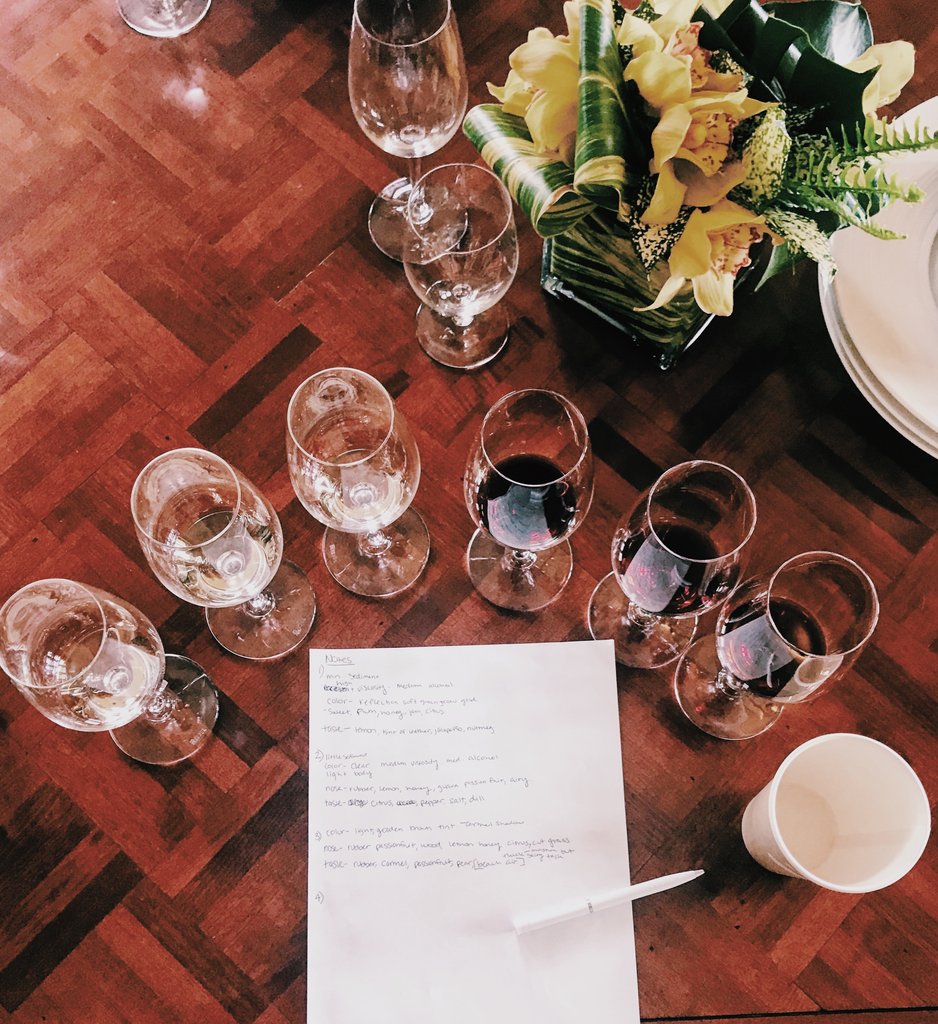
People are always asking us how to taste properly, so we cover it in each of our virtual tasting classes. Here we walk through ten frequently asked questions and answers about tasting wine.
1) What are the 5 S’s in Wine Tasting?
If you already know the “5 S’s,” that’s great: it’s not something everyone has heard of, but it tends to stick because every step starts with the letter S. As sommeliers, we use this systematic approach to reveal a different aspect of the wine at each stage, from its visual appeal to its aromatic notes and flavors.
- See: hold the glass against a white background and look at the color, intensity, and clarity. Color hints at the wine’s age and grape variety, white wines tend to darken with age while reds become lighter and more transparent, and a hazy appearance can point to a fault.
- Swirl: this oxygenates the wine and releases its primary aroma compounds. Watching how the liquid moves (the “legs” or “tears” on the glass) can also hint at body, sugar, and alcohol level.
- Sniff: lean in and take a deep breath. Primary fruit, flower, or spice aromas often come through first, while secondary aromas from winemaking might suggest bread, yeast, cream, or smoke. This step can also flag off-odors like cork taint or oxidation.
- Swish: let the wine move around your entire palate so every part of your tongue gets a chance to taste it.
- Swallow (or spit): feel for the weight of the alcohol, the texture of the wine, and the length of the finish.
In our own tastings we add three more S’s: Smell, Sip, and Savor. Sip lets you notice dryness or sweetness, acidity, and tannin, plus how serving temperature changes the wine’s flavor and body. Savor is about the finish: how long the flavors linger, whether new flavors emerge, and whether everything, fruit, acidity, tannin, and alcohol, feels balanced. There’s no right or wrong way to taste, it’s about your own experience and enjoyment.
2) Do Wine Tasters Get Drunk?
Sometimes. No matter how often you spit instead of swallow, if you taste enough wine your palate gets tired and the alcohol you’re tasting will catch up with you a little. If you do get drunk, do not drive home.
3) What are the Four Types of Wine?
There are more than four, but the ones people usually mean are red, white, rosé, and sparkling. Fortified and dessert wines round things out, and each of those categories has many individual styles within it, but knowing these basics is a great start.
4) Is Wine Healthy to Drink?
In moderation, yes. Wine does contain ethanol, which is toxic to the body, but there are real health benefits packed into the skins and juice of the grape.
5) How Do You Know if a Wine Was Aged in Oak?
Wine doesn’t smell “oaky” on its own, toasted oak barrels add an extra layer of flavor. Vanilla, baking spices, coconut, and dill are the telltale notes. Oak tannins are another sign of extended aging, and oak generally gives a wine more breadth and roundness.
6) Why Do I Get Headaches When I Drink Wine?
This depends on the wine. Residual sugar (the small amount of sugar winemakers sometimes leave in instead of fermenting all the way to alcohol) combined with alcohol is often the culprit, since it balances an otherwise heavier or more alcoholic wine. It is not the sulfur: modern winemaking standards make it very hard to over-sulfur a wine, and white wines actually contain more sulfur than reds. Look for wines with little to no residual sugar, and drink water between glasses.
7) How Would You Describe the Taste of Wine?
There are countless descriptors, but a few basics to start with:
- Fruit flavors: stone fruits, orchard fruits, tropical fruits, or berries.
- Earthy flavors: mineral, chalky, wet stone, forest floor, damp earth, tobacco, tomato leaf.
- Oak: baking spices, cinnamon, clove, nutmeg, coconut, vanilla.
8) Does Wine Taste Like Grape?
Sometimes. Muscat or Gewürztraminer really can taste like grape soda, but most other wines have deeper flavors than just “grape.” Use the descriptors above and think back to other fruits to find what’s really in the glass.
9) What is a Rich Wine?
A rich wine is full of flavor and complexity, heavy or bold in the mouth. A full-bodied wine is a rich wine. Common rich varietals include Cabernet Sauvignon, Zinfandel, and Syrah.
10) What is the Best Tasting Wine?
Naturally, we’d say it’s our own Malibu Coast wines. Explore our current releases and find the one that fits your palate.
Now that you’re a pro, come book a tasting with us and taste it all firsthand.