How to Read California Wine Labels
Wine labels are your first introduction to the wine you’re selecting. They tell the story of the wine and hint at the flavor profile to expect. Most importantly, the label represents the brand you’re buying from. Labels are crafted with specific design principles and must follow California’s wine label requirements. This article will help you understand how to properly read a California wine label.
Why Does the Front Label Have No Words?
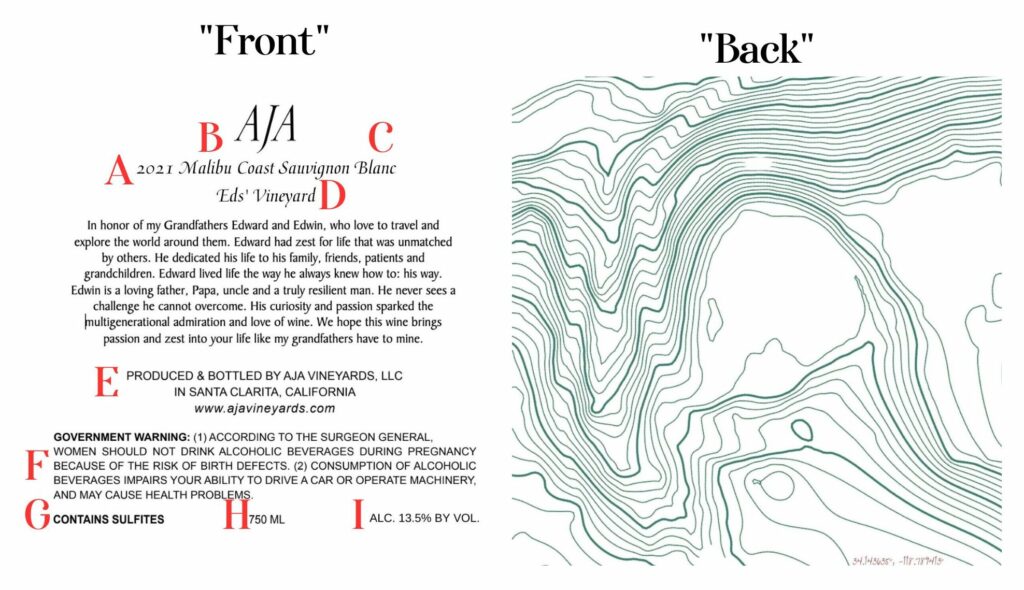
You might be wondering: if there are pretty designs on the front of the label, why is there no text? That’s because, technically, the label you’re looking at is actually the back label according to the government. So when we get our labels approved for sale, we have to make sure the back label is up to par.
So how do you actually read the wine label?
What’s on the Label
Every California wine label states the following:
- Name of the winery
- Name of the AVA (American Viticultural Area)
- Type of wine, either varietally specific (Sauvignon Blanc) or one of the approved wine styles (Rosé)
- Alcohol content
- Bottle size and amount of wine in it
- Whether or not it contains sulfites
- Where the wine was bottled
- The government warning
Some additions are common but not required:
- Vintage (or non-vintage)
- Vineyard designation
- A specialty name for the wine
- Number of bottles produced
It’s worth familiarizing yourself with these features so you know what you’re selecting.
California Wine Label Requirements
California has specific rules that give consumers information on the label, and guide wineries to make sure their labels carry the correct content. Specific wines have a ratio they must follow to use certain names. In California, a wine labeled Chardonnay, for example, can be 75 percent Chardonnay grapes and 25 percent any other variety.
To carry a vintage, a wine must include 95 percent of the grapes harvested that specific year. The other 5 percent can come from a different year, which is most commonly used with vintage sparkling wines made using the traditional Champagne method, to keep the style consistent.
To carry the California distinction, 100 percent of the grapes need to come from California. Other states have their own rules, but when you see a California wine, you’re getting a true California-grown wine. Similarly, to claim a specific region on the label, 85 percent of the grapes need to come from that viticultural area.
Vegan, Biodynamic, Organic, and Sustainability Designations
You might also come across a small certification symbol on a wine label, similar to ones you may recognize from food or other beverages. The most common are vegan, biodynamic, organic, and sustainable, and each one requires meeting specific certified criteria.
The most familiar is USDA Organic, given to products that follow organic farming and production practices without chemical insecticides. Some wines are instead labeled “Made with Organic Grapes,” meaning the grapes were organic even though the process as a whole isn’t certified organic.
A “V” symbol means the wine is vegan, which may surprise people who assumed all wine already was. Some wineries use egg whites in the filtration process, which makes the wine not vegan.
To be biodynamic, a farming process has to take the health of the soil into account. Biodynamics is a holistic approach to farming using natural elements and the rhythms of nature to promote positive growth, tracking moon and sun cycles, exploring biodiversity, and using beneficial insects to support the health of the vines. This certification is probably the hardest to find on a wine bottle: not many wineries qualify.
Lastly, the sustainable symbol goes to producers who follow sustainable practices that help the planet. AJA is proud to do our part by using recycled AJA wine bottles for our candle line, and we’re working toward sustainable certification by 2025.
Reading AJA Wine Labels
Our wine labels are designed beautifully, but they also follow California law. AJA labels carry the vintage, the variety, the region, and a crafted description on the back label. Our wines are certified California wines from classified regions (American Viticultural Areas) across the California coast. The wines from our vineyards in the Malibu Coast, such as the Syrah and Cabernet Sauvignon, carry an estate distinction, which requires a minimum of 95 percent of the grapes to be grown on the property. We’re proud to produce 100 percent estate wines from our Malibu estate. For every variety, we’ve written a description that shares a bit more about the wine and its story within the AJA family. You can find specifications on every wine in our shop.
On the bottom right of the back label you’ll find the alcohol content by volume, along with our logo certifying that the wine was produced and bottled by our winery.
I hope this helps you properly read a wine label!
We want to thank you all for your continued support. Our new 2022 Chardonnay, Rosé, and Sauvignon Blanc are officially available on our redesigned website. We welcome you to this next AJA chapter!
Cheers,
Braden