Proprietor’s Blog 6/8 The Talk of France: Terroir
Wow, I’ve missed writing to you all, but I hope you know that if I’m not writing to you, it’s because I’m working my little butt off to produce the best wine you can ask for.
As you may have seen from previous posts, my dad and I just got back from a long trip to the French wine country. We visited Champagne, the Loire Valley, and Bordeaux: two weeks driving around the countryside that was both invigorating and exhausting. Each day we visited anywhere from one to four wineries, meeting with winemakers and proprietors and tasting some of the most incredible wines the world has to offer.
While in France, the tasting was imperative, but understanding the history and culture of each region, their style of winemaking, their thoughts on terroir, and their approach to wine tourism was just as enlightening. Let’s dive into these topics.
History and Culture of the Regions
Many French wine regions have such strong roots in the wine world, with wineries dating back centuries. We met with Nicolas Maillart in Champagne and found out he was the tenth generation of winemakers in his family. You can’t find that just yet in the States.
Family is everything in French wine country. About 90% of wineries in France are like family heirlooms, owned by the same family since the 1400s or 1500s. It’s very rare to find a first-generation winemaker in France, because it’s so hard to get a plot of land.
If you’re new to the wine industry in the US, you can find land and build a vineyard, you just need the right permit. In France, every vineyard plot is accounted for under the AOC regional requirements established by the government. Getting an additional portion of land surveyed and approved as part of an AOC can take years, it’s nearly impossible. The only way in is if an owner of a plot dies and the family doesn’t want to take it over, or if it’s sold by the family that owns it.
So why does the AOC matter? It provides an expectation of quality for the consumer. In France, if it’s AOC, it’s almost always going to be a great wine, it’s a standard expectation of excellence. Some winemakers don’t believe in the AOC system and choose to plant what they want, where they want. But in a country so entrenched in history, that makes a wine much harder to sell.
Winemaking Style
AOC laws set requirements like harvest time, allowed varieties, and aging requirements, but there’s still room for variation depending on the region. In Champagne, for example, wine needs to be aged a minimum of 15 months after fermentation before it can be called Champagne. How much longer than that is a stylistic choice. Winemakers there can also decide how much Pinot Noir, Chardonnay, and Pinot Meunier to blend in, and how they blend and reserve their non-vintage wines to control quality and consistency.
In Bordeaux, though there’s a required set of varieties, there isn’t the same aging requirement as Champagne. Winemakers there can choose their aging vessels: what type of oak, what level of toast, how much new versus neutral oak. All of that shapes the wine.
Terroir
I’ve talked about this term before because it’s extremely valuable to our winemaking style, and yes, I took it from the French. In France, the goal is to showcase wine based on the specific plot of land it comes from. In Chinon, we tasted eleven different Cabernet Franc wines from eleven different plots: one grown on clay, another on limestone, another on schist, another on tuffeau, just to name a few soil types. They were all from the same producer and vinified almost identically, yet each wine tasted vastly different. The only real difference was the soil.
Even though terroir directly translates to “soil,” it has come to mean so much more in the wine world. Terroir refers to the soil, the vinification process the winemaker uses, the history of the family, the culture surrounding the wine from that region and winery, and the story that makes the bottle so enticing. Terroir is everything that makes a wine what it is.
Eno-Tourism
The last topic I wanted to touch on is eno-tourism, because it’s so prevalent here in the US but lacking in parts of France, likely tied to their cultural foundation in service. Walk into a French restaurant and the service isn’t what you come for, the food is. In the US you have to nail both or risk a bad review. To the French, eno-tourism is either everything or nothing, depending on the region and how a winery chooses to sell its product.
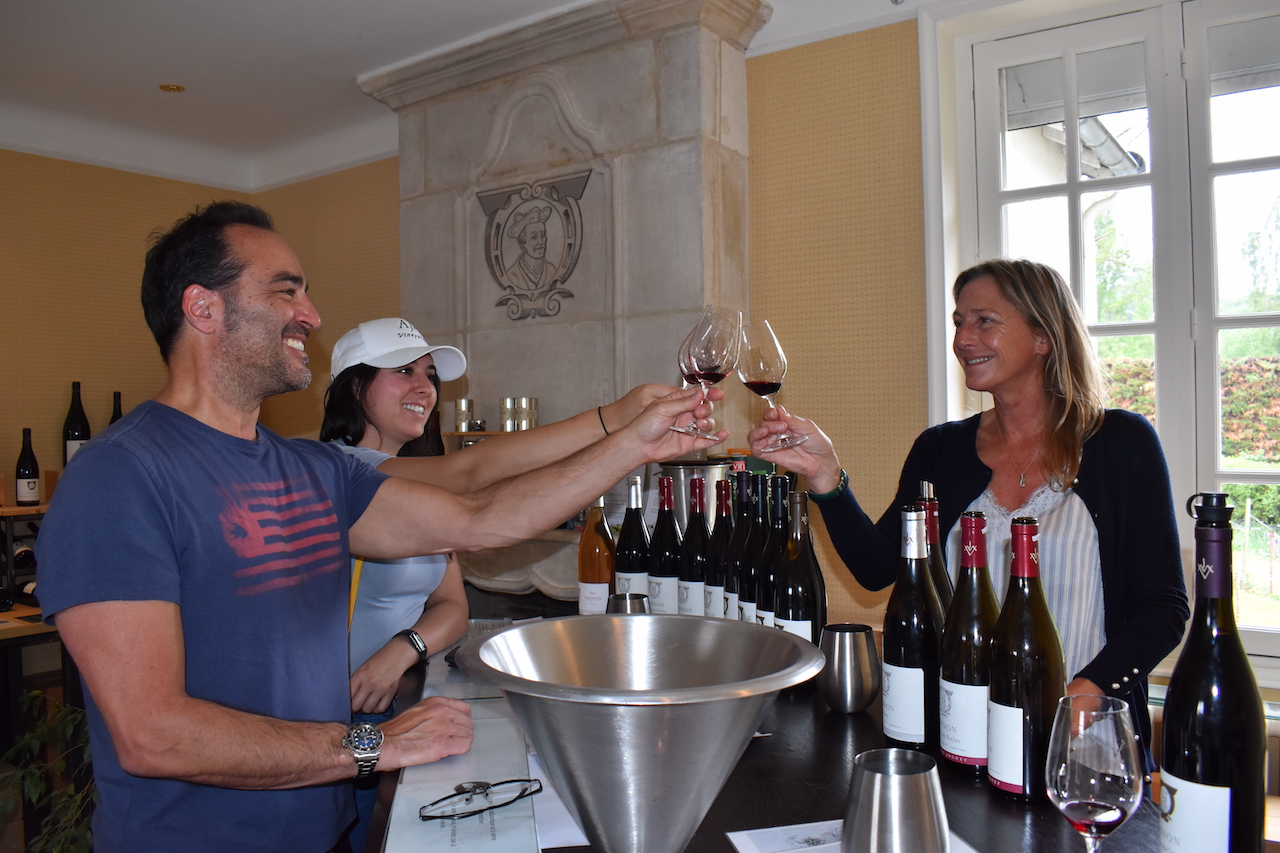
In Savennieres, the winery we visited leaned heavily on eno-tourism, selling most of its wine to club members and through tastings, and clearly working to create an experience for visitors. In Champagne it was about half and half: the large houses had tours and tastings, while smaller houses sold mostly through importers and had no real tasting room. Bordeaux was much the same, half the tours were geared toward tourists, the other half were not.
Overall, I think we gained a lot of knowledge about the wine world and what we wanted to bring back to share with you. We realized how much we want to express the importance of terroir, while sharing our passion directly with you in a tasting room someday soon. We picked up ideas for our winemaking strategy and ways to tie our family history into every pour.
So at this point I’ve heard from half the experts. The other half of the story is all of you: what do you want to see AJA become? How can we get you more excited about our wines? What experiences have you had at other wineries that make you want to keep coming back? You are who I want to share my story with, and who I make this wine for.
Hope you have a great week, and I’ll chat with you soon.
Cheers,
Amanda